The Lyceum: Virginia Daily — Mar 13, 2026

Photo: lyceumnews.com
Friday, March 13, 2026
The Big Picture
A convicted ISIS supporter walked into an ROTC classroom at Old Dominion University yesterday and killed a decorated Army lieutenant colonel before students physically subdued and killed the gunman — the FBI confirmed it as an act of terrorism before the day was over. Meanwhile in Richmond, the General Assembly officially failed to pass a budget before Saturday's adjournment, blown apart amid a billion-dollar fight over whether data centers should keep their sales tax exemption. Virginia is processing an act of war and an act of governance failure simultaneously, and both demand your full attention.
Today's Stories
A Terrorist Attack in an ROTC Classroom — and the Students Who Ended It
Shortly before 11 a.m. Thursday, Mohamed Bailor Jalloh walked into an ROTC classroom in Constant Hall at Old Dominion University in Norfolk, asked whether it was a military science course, and opened fire. He killed Lt. Col. Brandon Shah — a professor of military science, two-time Bronze Star recipient, and helicopter pilot with over 600 combat flight hours across Iraq, Afghanistan, and Eastern Europe — and wounded two others.
Then the students in the room did something extraordinary. They rushed Jalloh and subdued him. By the time it was over, the shooter was dead; authorities have not elaborated on the cause of death. FBI Special Agent in Charge Dominique Evans said the ROTC students showed "extreme bravery and courage" and confirmed Jalloh was not shot, without elaborating on how he died.
Jalloh, 36, was a naturalized U.S. citizen from Sierra Leone and a former Virginia Army National Guard specialist who pleaded guilty in 2016 to attempting to provide material support to ISIS. During a three-month FBI sting, he told an informant he was contemplating a Fort Hood-style attack on military targets. He tried to buy an AR-15 from a Virginia gun store, was turned away for lacking paperwork, returned the next day, and bought a different rifle — one prosecutors said the FBI had rendered inoperable before he left the store. He served eight years in federal prison and was released in 2024.
He was living in Sterling, Virginia — a Loudoun County suburb near Dulles Airport — at the time of the attack. That means a man with a terrorism conviction and a stated interest in attacking military targets was living freely in Northern Virginia for at least a year. The critical question now: what federal supervision, if any, existed between his release and Thursday morning? The FBI's Norfolk Joint Terrorism Task Force is leading the investigation. Governor Spanberger called Shah someone who "didn't just lead a life of service to our country, he taught and led others to follow that path."
ODU — where nearly 30 percent of students have military ties and which sits adjacent to Naval Station Norfolk, the world's largest naval base — closed Friday for counseling and support. Expect congressional hearings and a formal demand for a federal accounting of Jalloh's post-release monitoring.
The Virginia Budget Is Dead — Amid a Data Center Tax Fight

If you work for the Commonwealth, teach in a public school, or depend on Medicaid — this is your story.
Virginia lawmakers failed to reach a budget agreement by Thursday's effective deadline, meaning a Saturday vote before the session ends is mathematically impossible. The impasse centers on a dispute over a sales tax exemption that lets data center companies avoid paying hundreds of millions on the servers, cooling systems, and power equipment inside their facilities.
The numbers are staggering. In fiscal years 2024 and 2025, data center companies claimed $3.2 billion in sales tax exemptions. Bloomberg puts the industry's 2025 exemption alone at roughly $1.9 billion. Senate President Pro Tempore Louise Lucas (D-Portsmouth) wants to end the exemption entirely, arguing it could raise about $1 billion over two years. "They can keep building 'em, they just need to pay their fair share of taxes, that's all," she told reporters.
The House, led by Appropriations Chair Luke Torian (D-Prince William), refused to move, citing 74,000 Virginia jobs tied to the industry. Governor Spanberger has sided with the House but floated a new idea: a targeted "consumption tax" on data center electricity and water use, with revenue funneled directly into grid upgrades for Loudoun, Prince William, and the Ashburn corridor.
Thursday afternoon, tech lobbyists were holed up in two of the Capitol's historic rooms while lawmakers shuffled back and forth. House Speaker Don Scott (D-Portsmouth) told VPM there would be no budget Thursday. Trapped inside the impasse: teacher raises, Medicaid restoration, and a school construction financing tool that growing localities have been pushing for — all Democratic priorities now frozen until someone blinks.
A special session is almost certain. If no deal materializes by Saturday, Spanberger can call lawmakers back. The constitutional hard deadline is July 1. Watch for a special session announcement early next week.
Spanberger Backs Redistricting Amendment as Disinformation Floods Phones
Governor Spanberger is now openly urging voters to back the April 21 constitutional amendment that would let the General Assembly temporarily redraw U.S. House districts before November — pitched as a one-time fix before the independent redistricting commission resumes after the 2030 census. Supporters say it prevents court-imposed maps from determining who represents Virginia this fall; critics warn any return of map-drawing to lawmakers is a slippery slope.
Meanwhile, voters are already posting screenshots of misleading text messages about the amendment — some falsely claiming it permanently hands map-drawing back to politicians, others saying it automatically adopts California-style maps. The early wave looks like a mix of out-of-state activists and cheap text-blast vendors.
Fairfax County is preparing for high turnout: Superintendent Michelle Reid told families every FCPS school will close on April 21, citing the number of buildings used as polling places. For thousands of parents, an abstract constitutional question just became a childcare problem. And it's not cost-free — FCPS still pays staff, may need makeup instructional time, and the county's Office of Elections will be paying overtime during a budget season that's already stretched thin.
Leidos Lands $454.9M Air Force Cloud Contract
Reston-based Leidos announced a $454.9 million contract to modernize the U.S. Air Force's Cloud One platform, pairing the company with major cloud providers to harden and automate the Air Force's multi-cloud environment. For Northern Virginia, the win channels hundreds of millions into the local economy and underscores the region's role as the federal government's IT backbone — the private-sector side of the same digital boom that's tearing the state budget apart in Richmond.
Environmental Groups Sue Over Chesterfield Gas Plant Tied to Data Center Demand
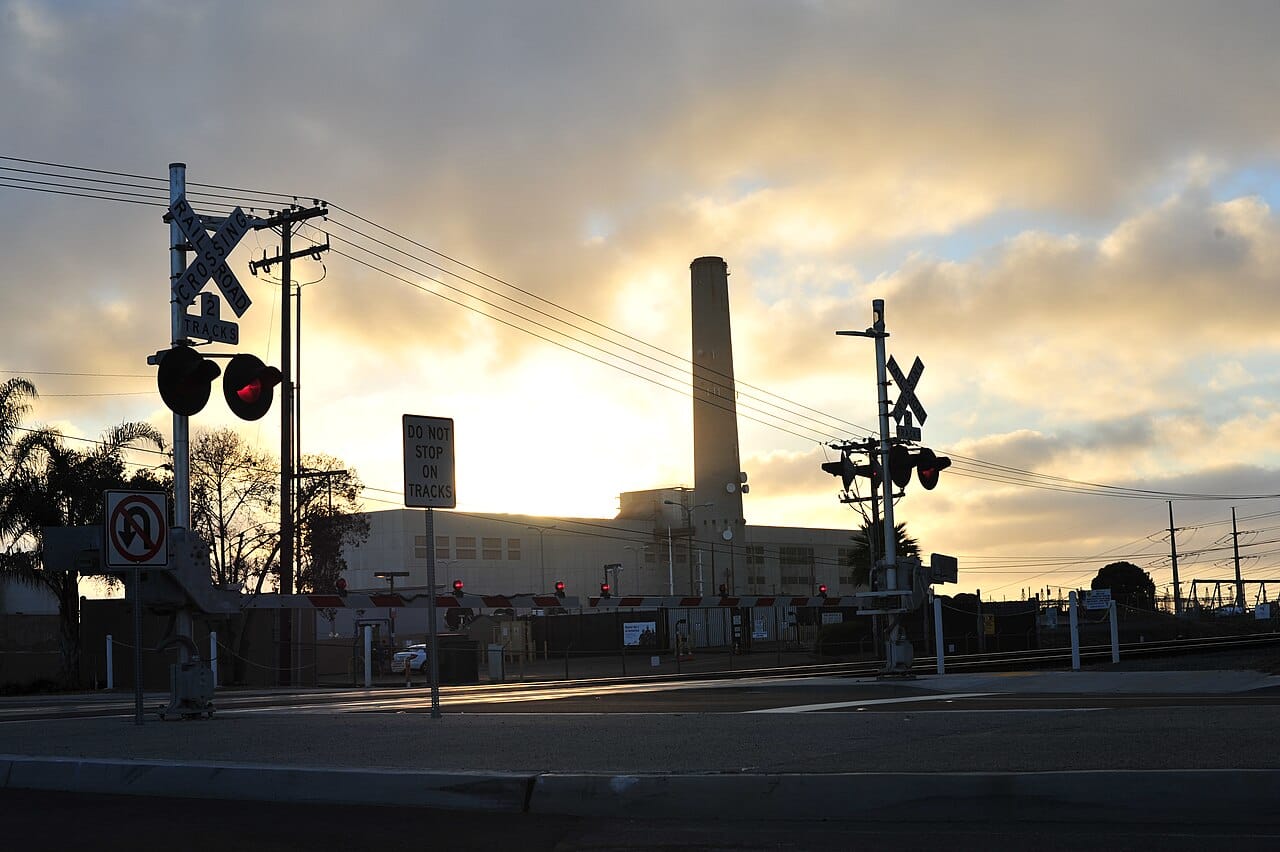
Environmental groups filed suit challenging the approval of a planned 944-megawatt natural gas plant in Chesterfield County that Dominion Energy says is necessary to back up surging data center demand. The plaintiffs argue the project violates Virginia's Clean Economy Act; Dominion says reliability requires it, given that data center requests in its pipeline could require nearly three times the state's current peak electricity load.
This case forces a legal test of a question Virginia hasn't answered: should the data center boom be powered by new fossil-fuel infrastructure? A ruling against the plant could constrain the state's near-term options for keeping servers running during peak demand — and it adds another front to the data center wars already consuming Richmond.
⚡ What Most People Missed
- School construction money is trapped in the budget wreck. Senate negotiators folded a proposal giving localities new revenue-raising authority for school capital needs into the budget rather than advancing it as a standalone bill; because the budget conference failed, this financing tool — which Loudoun, Prince William, and Fairfax have been pushing for — also stalls. It's getting zero coverage.
- Virginia quietly passed three narrow AI bills while everyone watched the budget fight. HB 580 (AI-related fraud), HB 797 (independent verification of AI systems), and a companion measure cleared the General Assembly this session and are headed to the governor, while most more ambitious proposals were tabled until 2027, leaving a patchwork of narrow rules now and a larger framework deferred.
- Fairfax County is hiring a consultant to write its AI economic strategy. Rebecca Moudray from the county's Department of Economic Initiatives told the Board of Supervisors they received "dozens of applicants" for a firm to develop an "AI Economy Action Plan" — mapping the regional AI landscape, organizing a stakeholder summit, and creating a framework. Northern Virginia's largest county sees AI not as a new tool but as a fundamental economic shift requiring a deliberate local strategy.
- A grandmother spent 108 days in jail because facial-recognition software misidentified her. Angela Lipps was misidentified in a North Dakota bank-fraud probe despite bank records showing she was 1,200 miles away. She lost her home, car, and dog. Virginia law enforcement agencies use similar tools, and the Commonwealth currently lacks a comprehensive statute limiting how facial-recognition outputs can trigger arrests.
- The "consumption tax" idea could quietly strip power from county boards. If the state creates a centralized tax stream on data center electricity and water, Loudoun and Prince William supervisors may find they have less room to negotiate local proffers and tax rates with builders — shifting leverage over this booming sector from county boards to Richmond at the exact moment locals are fighting hardest for it.
📅 What to Watch
- If Spanberger calls a special session early next week, watch whether she uses the interval to broker a data center tax compromise that splits the difference — for example, a partial exemption phasedown or a consumption tax — rather than forcing either chamber to capitulate entirely.
- If the FBI's Norfolk Joint Terrorism Task Force reveals gaps in Jalloh's post-release federal supervision at the expected Friday press conference, it could prompt a broader review of monitoring protocols for terrorism convicts nationwide.
- If the Chesterfield gas-plant lawsuit succeeds, it could force Dominion and state regulators to find non-fossil alternatives for data center backup power on a timeline the grid isn't ready for — potentially creating short-term reliability constraints that would reshape the tax-exemption debate.
- If the State Corporation Commission approves the proposed about-3% rate increase to fund Loudoun-area grid upgrades in its mid-March hearings, residential customers could see higher bills by summer — increasing political pressure on local officials ahead of fall elections.
- If the medical malpractice cap bill reaches Spanberger's desk unchanged, her decision will signal whether she's willing to reshape Virginia's business climate in favor of plaintiffs; watch rural hospital systems, where even modest premium increases can push specialists to relocate.
The Closer
ROTC students killing a terrorist with their hands in a Norfolk classroom. Tech lobbyists camped in the Capitol's historic rooms while a billion-dollar budget bleeds out on the floor. A grandmother losing her home because an algorithm couldn't tell two faces apart.
Somewhere in Richmond, a lawmaker is literally unplugging clocks — and honestly, that might be the most honest thing anyone's done in that building all week.
Have a sharp weekend. —The Lyceum
If someone you know needs to understand what just happened in Virginia, send them this.