The Lyceum: Virginia Daily — Mar 27, 2026

Photo: lyceumnews.com
Friday, March 27, 2026
The Big Picture
Virginia Governor Abigail Spanberger has seventeen days to sign or veto the most consequential stack of legislation the Commonwealth has seen in a decade — guns, solar siting, a Tysons casino, immigration — and she still doesn't have a budget to work with. Every signature or veto between now and April 13 doubles as a negotiating signal for the budget special session on April 23, where the real fight is whether data centers keep their $1.9 billion tax break. Meanwhile, overnight storms knocked out power to thousands in southwest Virginia, labor unions rallied for a Fairfax casino, and Verizon quietly retired legacy switching equipment in Alexandria and Fairfax — three reminders that state-level stalemates eventually show up as very local disruptions.
Today's Stories
Unions to Spanberger: A Tysons Casino Means Union Jobs
A coalition of Northern Virginia labor unions rallied Wednesday at the vacant auto dealership site near the Spring Hill Metro station in Tysons, publicly pressing Governor Spanberger to sign the bill allowing a casino in Fairfax County. Speakers framed the proposed entertainment complex as a "path to the middle class" through thousands of unionized construction and service jobs — the first organized, public push from a key Democratic constituency since the bill was delivered to the governor's desk.
This complicates Spanberger's calculus considerably. Many Fairfax County elected officials and civic groups oppose the project on land-use and quality-of-life grounds, but organized labor is now treating it as a major win worth fighting for. The bill passed both chambers of the General Assembly and was delivered to the governor, lacking a veto-proof majority. If she signs, she locks in labor support heading into a bruising budget session but alienates suburban Democratic officials who helped elect her. If she vetoes, she picks a fight with unions weeks before she needs legislative allies in the room. Watch whether Fairfax Board of Supervisors members start publicly lobbying the governor's office — that's the signal this has escalated from a land-use debate to a full intra-party test of influence.
Spanberger Faces Second Amendment Test as Virginia Gun Bills Loom
Seventeen days remain before Virginia's most sweeping gun legislation in a generation either becomes law or dies. Ten bills sit on Spanberger's desk, passed by both chambers of the General Assembly and delivered to the governor, headlined by SB 749/HB 217 — an assault weapons ban that would prohibit the sale, purchase, import, or manufacture of certain semiautomatic firearms starting July 1, plus a 15-round magazine cap. People who already own banned items could keep them under a grandfather clause, which means the next 95 days are likely to produce a surge in Virginia gun shop sales before the window closes.
The litigation countdown is already running. Gun Owners of America and the NRA have both pledged immediate court challenges, likely landing in the Eastern District of Virginia's fast-moving federal docket. Per the Daily Signal's reporting, the legal arguments will test post-Bruen Second Amendment doctrine in a state that just flipped from vetoing 42 gun bills under Youngkin to passing 25 reforms in a single session. Virginia is about to become a marquee Second Amendment test case. If the courts issue a preliminary injunction before July 1, the ban would not take effect; if the law survives early challenges, expect a wave of copycat legislation in other blue-trifecta states. The observable signal: watch the EDVA docket within 48 hours of Spanberger's signature for emergency TRO filings.
Buried in the package and almost nobody is covering it: SB 115 would overhaul concealed-carry reciprocity, requiring Virginia's superintendent of police to determine whether other states' permit standards are "substantially similar" to Virginia's. If no such finding is made, Virginia would stop recognizing out-of-state permits — and those states would likely retaliate. Per the Washington Times' legislative coverage, that reciprocal collapse creates immediate legal exposure for Virginians who travel armed.
Severe Weather Hits Southwest and Central Virginia Overnight
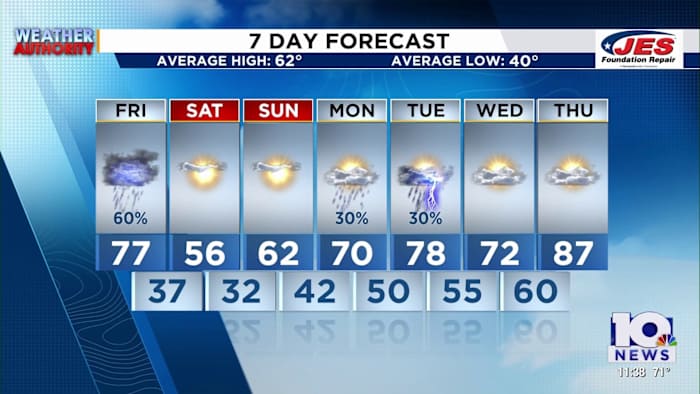
If you're driving I-81 through Roanoke or Botetourt County this morning, last night's storms are still making themselves felt. WSLS 10 reported severe thunderstorms rolled through southwest and central Virginia starting around 11 p.m. on March 26, bringing gusts up to 50 mph, heavy rain, and isolated tornado risks into the early hours of March 27. The National Weather Service issued watches for Roanoke County and Bedford until dawn; flash flooding was the primary concern along the James River corridor. No major injuries have been reported, but downed trees and outages hit thousands — Appalachian Power's Roanoke-area outages peaked near 5,000 customers as of early morning March 27.
What changes if this pattern continues: southwest Virginia's rural hospital network and emergency services — already strained by workforce shortages and Medicaid funding uncertainty — get tested again just months after January's devastating winter storm killed multiple Virginians and knocked out power to over a million customers statewide. The failure scenario is a compounding one: each weather event that strains the same infrastructure makes the case for grid hardening more urgent and more expensive, feeding directly into the budget and transmission-line fights playing out in Richmond. Watch VDOT and Appalachian Power updates through midday for road closures and restoration timelines.
What's Next for Virginia Data Center Oversight Bills as Spanberger Weighs Action
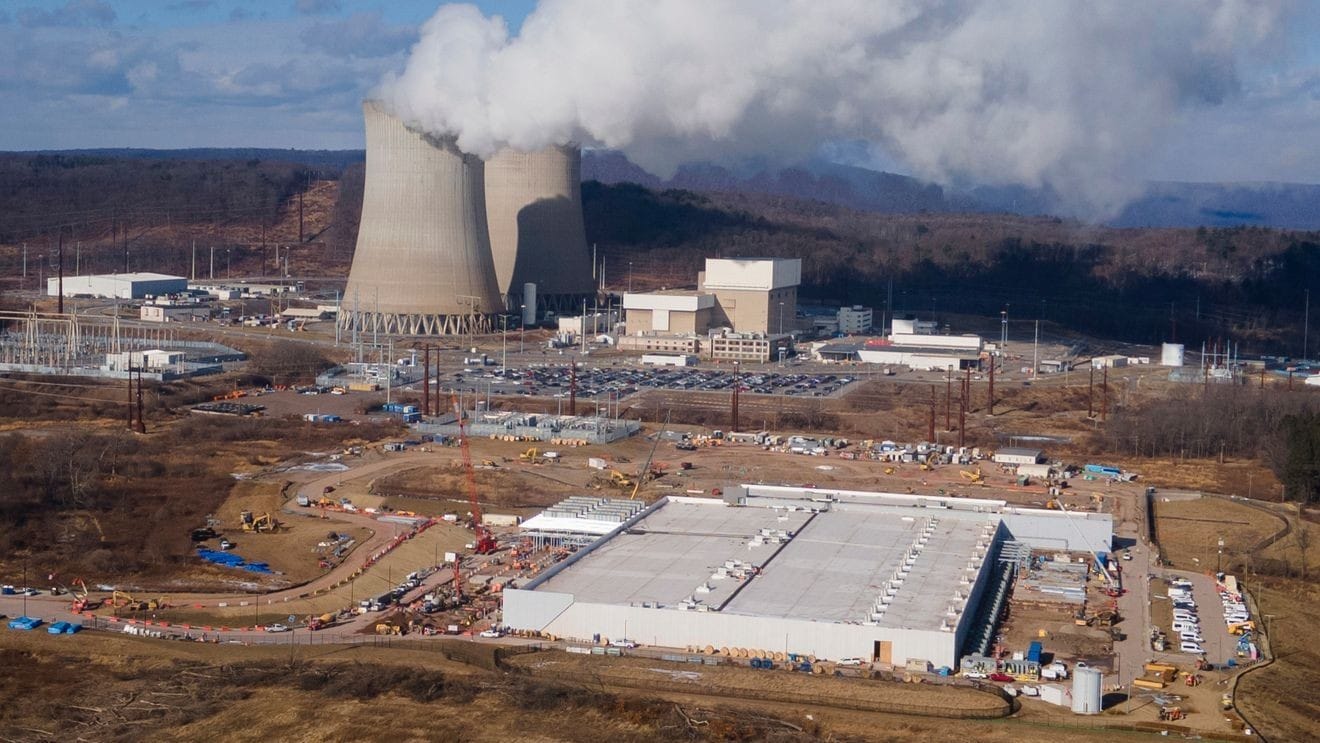
The data center fight is no longer just about tax breaks — it's about whether the state can regulate the industry's environmental footprint before the next wave of campuses breaks ground. WSET reports that several data center oversight bills are now on Spanberger's desk ahead of the April 13 deadline, including measures that would require water-use reporting, noise mitigation standards, and local government input on siting decisions. These bills emerged from the same legislative session that deadlocked over the $1.9 billion sales tax exemption, and they represent the regulatory track of a two-front fight.
If Spanberger signs the oversight package, Virginia gets its first real framework for managing data center impacts beyond zoning — a tool that localities from Loudoun to Appomattox have been demanding. If she vetoes or amends them into toothlessness, the message to rural counties now facing their first data center proposals is clear: you're on your own. The observable signal is whether Spanberger signs the oversight bills but preserves the tax exemption in the budget — a split decision that would let her claim both pro-business and pro-community credentials heading into the April 23 special session. Meanwhile, the grassroots counter-narrative to Dominion's "data centers aren't raising your bills" claim is hardening online, with residents linking to State Corporation Commission rate-case filings and building a cost-of-living argument that could reshape local politics in Northern Virginia suburbs.
Alexandria Schools May Close for Redistricting Referendum, Citing Student Safety
Alexandria City Public Schools announced plans to make April 21 a student holiday and teacher workday, joining Loudoun County Public Schools in shutting down for the redistricting referendum. The stated rationale is student safety and traffic management at polling places housed in school buildings — but the practical effect is a childcare disruption for thousands of families and a signal that Northern Virginia school systems are treating this special election with general-election-level seriousness.
More than 354,000 ballots have already been cast statewide (as of March 24, 2026), according to Virginia Public Access Project data compiled by the Virginia Mercury, with Republican-leaning areas posting turnout rates of 10–15% of registered voters (as of March 24, 2026) — outpacing many Democratic-leaning areas where satellite early-voting sites don't open until mid-April. If Fairfax and Arlington don't follow Loudoun and Alexandria in closing schools — thereby making it easier for suburban parents to vote — the turnout infrastructure gap could widen. The failure scenario for "yes" supporters: Northern Virginia's late-cycle surge never materializes, and a referendum designed to let Democrats redraw congressional maps fails because the party's strongest precincts underperformed. Watch VPAP's next data release after satellite sites open; that's when the "red mirage" narrative either holds or collapses.
Verizon Sets March 27 Switch Retirement for Alexandria and Fairfax — Another Quiet Nudge Toward All‑IP
Today — March 27 — is the date Verizon Virginia flagged in an FCC filing for retiring legacy switching equipment at its Cameron (Alexandria) and Fairfax central offices, migrating traffic to newer platforms. On paper, it's a routine network modernization. In practice, these retirements typically foreshadow the end of traditional copper-based services and can disrupt emergency systems, building alarms, and elevator phone lines still riding legacy circuits.
No consumer press has covered this yet; the only hard source is Verizon's own engineering notice. The risk is specific and immediate: if a condo's fire panel or a county facility's backup line is still on copper in those exchanges, the transition window is now. For local governments and commercial property managers in Alexandria and central Fairfax, this is a "call your facilities team today" flag. The broader signal is that Verizon's all-IP migration is accelerating in Northern Virginia — expect similar retirement notices for other central offices in the region over the next 12 months. If outages or alarm failures surface in the next few weeks, this filing will be the paper trail.
⚡ What Most People Missed
- Spanberger appointed Virginia's first Chief Energy Officer on March 26, per the governor's office — a new position created to coordinate the state's response to surging electricity demand, grid reliability, and rate pressure. The appointment landed the same week as the data center oversight bills and Dominion's peak-load filing showing Loudoun demand running 20% above earlier estimates as of the filing. This is a bureaucratic move that signals the governor is building institutional capacity for what she expects to be a long fight.
- The ABC Board is policing the line between "restaurant" and "bar" in Charlottesville. A pre-hearing conference for Dairy Market, the Grady Avenue food hall, found its food-to-alcohol sales ratio out of compliance for a mixed-drink license. A formal hearing is set for April 7. Operators running food-hall concepts in Scott's Addition, Clarendon, and the Wharf should be watching this case closely — it telegraphs how aggressively ABC plans to enforce ratios in mixed-use entertainment districts.
- Teachers are using Reddit as a back-channel HR department. A thread from a prospective Loudoun science teacher drew detailed responses from current educators across Fairfax, Prince William, and Arlington comparing pay, pensions, workload, and school climate. Northern Virginia is functioning as one integrated teacher labor market, and compensation decisions in one county are visibly shaping hiring in the others.
📅 What to Watch
- If Spanberger signs the data center oversight bills but preserves the tax exemption in the budget, it means she's betting she can claim both pro-business and pro-community credentials — and that the April 23 special session will be about revenue math and subsidy trade-offs, not regulatory philosophy.
- If EDVA receives emergency TRO filings within 48 hours of a gun bill signature, it means the legal challenge is pre-positioned and the courts — not the legislature — will determine whether Virginia's assault weapons ban takes effect in July.
- If Fairfax and Arlington schools don't close for April 21, the childcare-and-turnout gap between red-leaning and blue-leaning areas widens — and the redistricting referendum's outcome may hinge on a logistics decision made by school boards rather than last-minute campaign mobilization.
- If alarm or elevator-line failures surface in Alexandria or central Fairfax in the next two weeks, check Verizon's March 27 switch retirement filing — that notice is the paper trail for any copper-dependent system that wasn't migrated in time.
- If the Dairy Market hearing on April 7 produces a license suspension, expect every food-hall operator in Virginia to quietly audit their sales ratios before ABC comes knocking — and expect some to restructure menus or accounting practices preemptively.
The Closer
A union rally at a vacant car dealership pitching a casino as middle-class salvation, a Verizon switch retirement that could silently kill a condo's fire alarm, and a food hall in Charlottesville learning that the state cares very much about how many appetizers you sell per cocktail. Virginia: where the most consequential decisions are always the ones nobody's covering. Forward this to whoever handles your building's telecom contracts — they'll thank you Monday.
—The Lyceum
Know someone in Virginia government, real estate, or education who'd want this? Send it their way.