The Lyceum: Virginia Daily — Mar 31, 2026

Photo: lyceumnews.com
Monday, March 31, 2026
The Big Picture
Virginia is 13 days from the most consequential gubernatorial pen stroke in a decade. Governor Spanberger's April 13 deadline forces simultaneous action on an assault weapons ban, a Tysons casino bill that has split Fairfax County's own government, immigration enforcement limits, and recreational cannabis — while a redistricting referendum with uncomfortable early-vote math bears down on April 21, and the legislature returns April 22 to finish a budget that's stuck on a $2 billion data center tax fight. This isn't a slow week dressed up as a busy one. It's the week the fuses reach the powder.
Today's Stories
Virginia's Gun Package Is 13 Days From Law — and the Lawsuit Is Already Loaded
Twenty-five gun reform bills sit on Spanberger's desk, the most sweeping firearms package in Virginia history. The centerpiece — SB 749 / HB 217 — would ban the sale, purchase, manufacture, or transfer of assault weapons and magazines exceeding 15 rounds beginning July 1, with a grandfather clause for current owners. Both bills were passed by the General Assembly and sent to the governor when the session adjourned on March 14, 2026. The bill's sponsor, Sen. Saddam Azlan Salim (D-Fairfax), says the legislation was crafted in consultation with the governor's policy staff and he doesn't expect a veto.
What makes this more than a signing-ceremony story is what happens the moment ink hits paper. Philip Van Cleave, president of the Virginia Citizens Defense League, has publicly pledged to challenge the ban all the way to the U.S. Supreme Court, citing the post-Bruen legal landscape. The NRA's litigation team is actively preparing filings in the event of the governor's signature. The likely venue is the Eastern District of Virginia — the "rocket docket" — where aggressive scheduling means an injunction hearing could land before the July 1 effective date. That creates a real operational scenario where gun retailers and buyers face legal whiplash: a law on the books, a court order possibly freezing it, and nobody sure which rules apply on any given Tuesday.
The bill's sponsors consulted the Attorney General's office specifically to harden the legislation against constitutional challenge — an unusual step that signals how seriously Richmond takes the litigation risk. The observable signal: if Spanberger signs before April 13 and no injunction arrives by late June, Virginia becomes the first Southern state to enforce an assault weapons ban. If a judge stays the law, it becomes a multi-year appeals case with national implications. Gun owners rallied at the Capitol last week; expect the pressure from both sides to intensify daily through the deadline.
The Tysons Casino Bill Hits Peak Pressure — HOAs and Unions Are Now in Open Warfare
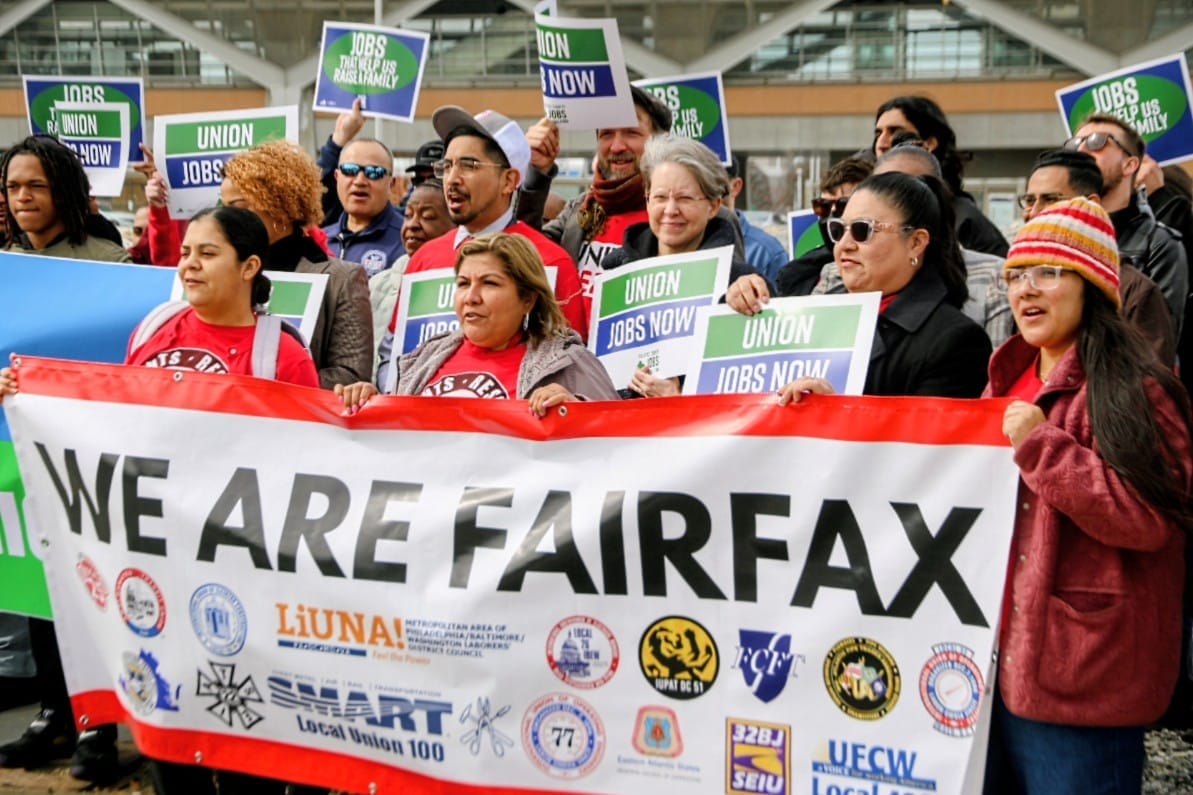
A coalition of homeowners associations formally asked Spanberger to veto SB 756 this week, escalating from neighborhood letter-writing to direct gubernatorial lobbying. That puts the governor in a genuine vise: labor unions spent last Wednesday at the Spring Hill Metro site arguing the casino means thousands of union construction and hospitality jobs, backed by an independent market analysis projecting $418–$682 million in first-year gaming revenue. Wynn Resorts and Caesars Entertainment have both confirmed they'd explore bids if the bill becomes law. SB 756 was passed by the General Assembly and sent to the governor when the session adjourned on March 14, 2026.
The politics are genuinely messy. Unlike Virginia's five existing casinos, the Fairfax County Board of Supervisors never asked for this — and most supervisors are publicly opposed. The bill passed without veto-override margins, so if Spanberger kills it, it dies. A detail few are tracking: a second proposed site near the Spring Hill Metro station changes which supervisors' districts absorb the traffic and neighborhood impact — geography that could flip individual votes if the bill survives.
If Spanberger signs, expect a countywide referendum where Fairfax voters decide directly — and a land-use fight that reshapes Tysons for a generation. If she vetoes, labor loses its biggest Northern Virginia play this cycle and the county's $150 million structural deficit gets no casino-revenue lifeline. The Board of Supervisors' public silence is itself the signal to watch.
GOP Gas Tax Holiday Lands as Iran-War Prices Hit $4 in Northern Virginia
Republican leaders unveiled a proposal to suspend Virginia's gas tax — currently north of 30 cents per gallon — for three months, pitched as emergency relief from pump prices amid the war with Iran. Regular unleaded is running about $3.93 statewide and over $4 in parts of the D.C. metro. GOP estimates peg the cost at roughly $125 million per month in lost transportation revenue.
The political calculus is sharper than it looks. A summer gas-tax holiday gives commuters immediate relief but blows a hole in the fund that pays for I-495 NEXT, local repaving in Fairfax, and transit operations across the state. Republicans say surpluses can cover it; Democrats say reshuffling transportation dollars would force project cuts and delays. The timing is also loaded: the proposal lands three weeks before the April 21 redistricting referendum, and a pocketbook issue like gas prices could change who shows up in car-dependent suburbs — potentially altering the referendum's outcome.
Watch whether suburban Democrats from Loudoun and Prince William decide short-term relief is worth long-term transportation pain. If the measure advances to a vote during the April 22 reconvened session, it becomes a live grenade in the same room as the data center tax fight and the rest of the unfinished budget.
Spanberger's Voter Roll Order Draws Instant RNC Lawsuit — Three Weeks Before the Referendum
Governor Spanberger signed an executive order directing the Department of Elections to tighten voter-roll maintenance — more aggressive cross-checking of deaths and out-of-state moves — and the Republican National Committee responded with a federal lawsuit in Richmond within hours. The RNC specifically names Fairfax and Henrico counties, arguing the order risks erroneous purges in swing suburban precincts. The order and the suit followed the General Assembly's adjournment on March 14, 2026.
The stakes are immediate: with the April 21 redistricting referendum approaching and early-vote data already showing a GOP turnout advantage (as of March 24, 2026) in Republican-leaning areas, any court injunction could force local election offices to change procedures mid-stream. Both sides cite the same 2025 federal law but interpret it differently. A related legal wildcard most coverage underplays: briefs on a separate lawsuit challenging the referendum itself are due to the Virginia Supreme Court two days after the April 21 vote — meaning the court could invalidate results even if "yes" wins.
If a federal judge rules this week, absentee ballot timelines in Northern Virginia's largest counties could shift. If the case drags past April 21, the order stays in effect through the referendum — and the litigation becomes a post-election weapon for whichever side loses.
The Data Center Tax Exemption Is Now the Budget's Central Fault Line
The General Assembly gaveled out March 14 without a budget deal, and the data center tax fight is the live wire inside that stalemate. The Senate Finance Committee proposed ending a tax exemption that saved Virginia's data center industry nearly $2 billion last fiscal year; that proposal was advanced in committee during the session that ended on March 14, 2026. Senate President Pro Tem Louise Lucas's position puts her at odds with both Spanberger and the House, who want to preserve the break. Every week the exemption stays alive costs the state roughly $38 million in foregone revenue — money that free clinics, school construction, and housing programs are fighting over.
Separately, 15 data center regulatory bills landed on Spanberger's desk covering new siting rules, sound assessments near homes and schools, and shifting some electrical-capacity costs onto the largest users. Those bills were passed by the General Assembly and sent to the governor when the session adjourned on March 14, 2026. They don't resolve the exemption question but create a new regulatory baseline the industry must reckon with regardless.
The reconvened session is April 22 — one day after the redistricting referendum — which makes the political dynamics genuinely unusual. If the referendum reshapes the map-drawing power structure, legislators may calculate their budget votes differently. The observable signal: watch whether the Senate softens its position on the exemption in exchange for concessions on the 15 regulatory bills, or whether both sides dig in and force a special session on April 23.
Richmond's Old Greyhound Station Gets a $132M Redevelopment — and Institutional Capital Is Moving Into Fringe Parcels
Walker & Dunlop announced Sunday that it arranged an $85.6 million construction loan and joint venture partnership to begin a $132 million redevelopment of the long-derelict Greyhound bus station in Richmond's Scott's Addition. The project replaces the shuttered terminal on North Arthur Ashe Boulevard with a 386-unit, 550,000-square-foot apartment building featuring 14,000 square feet of ground-floor retail. Construction is set to begin in Q2 2026.
The deal matters beyond one building because of where it sits: a Qualified Opportunity Zone adjacent to the $2.4 billion Diamond District redevelopment. Institutional lenders writing nine-figure construction loans for formerly marginal parcels is the clearest signal that Richmond's tax base and housing supply are about to shift materially in neighborhoods that were industrial afterthoughts five years ago. If the project fills at projected rents, expect more capital to follow into adjacent blocks. If it stalls — construction costs, interest rates, or permitting delays — it becomes a cautionary tale about whether Scott's Addition's momentum has outrun its infrastructure.
⚡ What Most People Missed
- Fairfax County lost 38,495 more residents than it gained from 2020 to 2025, per University of Virginia Weldon Cooper Center estimates cited in the unions' casino letter. That net outmigration number — largely drowned out by the deficit and federal-cuts narrative — is the demographic pressure behind both the casino push and the county's workforce experiments.
- Virginia's immigration bills could make the Commonwealth one of the most restrictive states for ICE cooperation. HB 1441 and SB 783 would bar local officers from performing federal immigration enforcement without a judicial warrant, and SB 351 would designate schools, hospitals, and universities as protected areas. All three bills were passed by the General Assembly and sent to the governor when the session adjourned on March 14, 2026. A new habeas corpus petition — Dione v. Warden, Farmville Detention Center — filed March 30, 2026, in EDVA signals the litigation wave is already starting.
- Booz Allen Hamilton is quietly downsizing its Tysons footprint, consolidating into a new tower plus several floors in Reston Row, per Virginia Business. When one of the region's largest federal contractors shrinks its office presence in Tysons, it tells you something about what "post-pandemic normalization" actually looks like for NOVA's biggest employers.
- Seven Virginia localities with zero data centers have recently approved new campuses or have applications pending, according to JLARC. Counties like Stafford and Caroline are building the regulatory plane while already flying it — and the Prince William water-permit denial we covered earlier this month is the precedent they'll all be watching.
- A three-day cluster of juvenile assaults and robberies in Arlington's Courthouse corridor hit the county crime log on March 30 — six juveniles in one mob assault, a robbery with a fleeing sedan, and scattered threats across Rosslyn and Crystal City. The kind of pattern that triggers school resource officer meetings and Nextdoor spirals before summer.
📅 What to Watch
- If a federal judge enjoins Spanberger's voter-roll order before April 21, Fairfax and Henrico election offices will have to change absentee procedures mid-stream — creating the kind of administrative chaos that generates provisional-ballot disputes and post-election litigation.
- If the gas-tax holiday advances to a vote during the April 22 session, lawmakers will face immediate trade-offs — for example, delaying I-495 NEXT construction, cutting local repaving schedules in Fairfax, or reducing transit operating funds — rather than merely swapping accounting entries.
- If Spanberger signs the immigration bills intact, the measures could prompt a federal challenge from the Department of Justice, likely in EDVA — where the Dione habeas case (filed March 30, 2026) is already testing detention practices.
- If the redistricting referendum's early-vote gap holds through the final week, the $33 million Democratic spending advantage (as of March 2026) may not be enough to overcome an intensity deficit — watch for emergency GOTV spending in Fairfax and Loudoun as the leading indicator.
- If the SCC greenlights Dominion's Prince William power upgrade in early April, expect zoning and permit applications for hyperscale campuses in Stafford and Caroline to accelerate within weeks — the grid approval is the bottleneck everything else is waiting on.
The Closer
A governor with 13 days to decide whether Virginia bans assault weapons or builds a casino, an RNC lawsuit trying to rewrite voter rolls three weeks before a referendum, and a derelict Greyhound station in Richmond about to become 386 apartments because institutional capital finally decided Scott's Addition is real.
Somewhere in Fairfax County, a homeowner writing a veto letter and a union member holding a rally sign are both absolutely certain the governor agrees with them — and at least one of them is about to have a very bad April.
That's your Monday. Eyes on the calendar.
If someone you know lives, works, or votes in Virginia and isn't reading this, fix that — forward it.