The Table — Apr 17, 2026
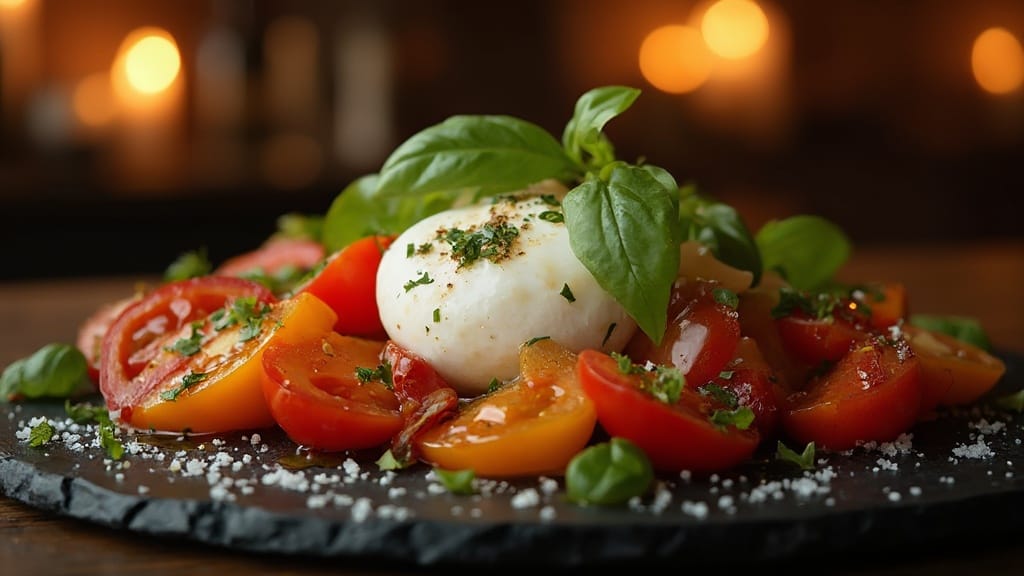
Photo: lyceumnews.com
Week of April 17, 2026
The Big Picture
The restaurant world is sorting itself into a new order this week, and the sorting mechanism isn't critics or Instagram — it's economics. Vegan fine dining is collapsing as a standalone category even as plant-forward cooking wins everywhere else. France just crossed the line where fast food generates more than half its restaurant revenue. And Michelin is redrawing its prestige map toward the Great Lakes. The common thread: who gets to define what a restaurant is for, and who absorbs the cost when the answer changes.
This Week's Stories
The End of Vegan Fine Dining — and the Victory It Conceals
Millennium, the Oakland restaurant that spent 31 years proving vegetables could anchor serious cooking, is scheduled to close on May 16. Co-owner Alison Bagby told the Press Democrat plainly: "It's clear to us right now that this isn't financially sustainable for us anymore. We just aren't busy enough to keep operating this way." Millennium held a Michelin Bib Gourmand and topped national plant-based lists. It was the standard-bearer.
It's not alone. According to Sentient Media, at least 20 well-known vegan restaurants in New York City closed permanently in 2025, and Eleven Madison Park — the restaurant that made the most dramatic bet on plant-based fine dining — reversed course and reintroduced animal proteins. Several formerly vegan spots including Moonburger, Hot Tongue Pizza, and Burgerlords have quietly added meat to their menus, according to Substack reporting.
Here's the counterintuitive diagnosis, per Grist's reporting: vegan fine dining isn't dying because plant-based food lost — it's dying because plant-based food won. Diners now expect good vegetable options everywhere, from sports arenas to tasting menus. The dedicated vegan restaurant was a vehicle for a movement. The movement succeeded. The vehicle became redundant.
There's a financial layer the cultural coverage underplays. At $200-to-$400-per-head price points, diners want visible markers of value — caviar, uni, wagyu — to rationalize the spend. That dynamic pushed kitchens to reintroduce animal proteins while keeping the plant-forward techniques they'd developed. Alternative reporting flags that VC funding into plant-based luxury concepts fell sharply in Q1 2026, matching the pattern: techniques migrate into broader menus even as pure-play concepts struggle.
What to watch: whether the innovations vegan fine dining incubated — vegetable-forward plating, fermented condiments, texture-first thinking — survive the category that created them. If they do, the closures are a graduation, not a funeral.
Fast Food Is Winning in the Birthplace of Haute Cuisine
France — the country where the word restaurant was invented to describe restorative broths sold on Paris streets in the 1760s — has crossed a threshold that would have been unthinkable a generation ago.
According to CNN, commercial chain restaurants in France broke 20 billion euros in annual revenue for the first time in 2023, a 30% jump from 2019 to 2023, and hit 21 billion euros in 2024. Bernard Boutboul, founder of restaurant consultancy Gira, told CNN that more than half of France's restaurant revenue now comes from fast food and fast casual.
The flashpoint is a chain called Tasty Crousty, which sells chicken tenders over rice and has gone viral on French social media. Its competitor Krousty Sabaïdi — which claims to have invented the "crunch box" format in Bordeaux in 2012 and now operates 34 outlets — triggered actual chaos: a giveaway promoted by influencer Fares Salvatore drew 3,000 teenagers to a Paris opening, and riot police were dispatched. Meanwhile, a McDonald's opening became a campaign issue in March municipal elections in the town of Laroque, with one candidate running against it.
The story most coverage misses: the chicken-over-rice format is rooted in the food traditions of France's large Maghrebi and West African communities — the same communities that built the halal snack bars feeding French cities for decades. This isn't just a fast food story. It's a story about whose food gets to go mainstream. If the bistro, the brasserie, and the neighborhood table d'hôte can't compete on margin, the question becomes whether French culinary identity adapts or simply mourns.
From the Khumbu Valley to the Colorado Rockies: The Sherpa Culinary Diaspora
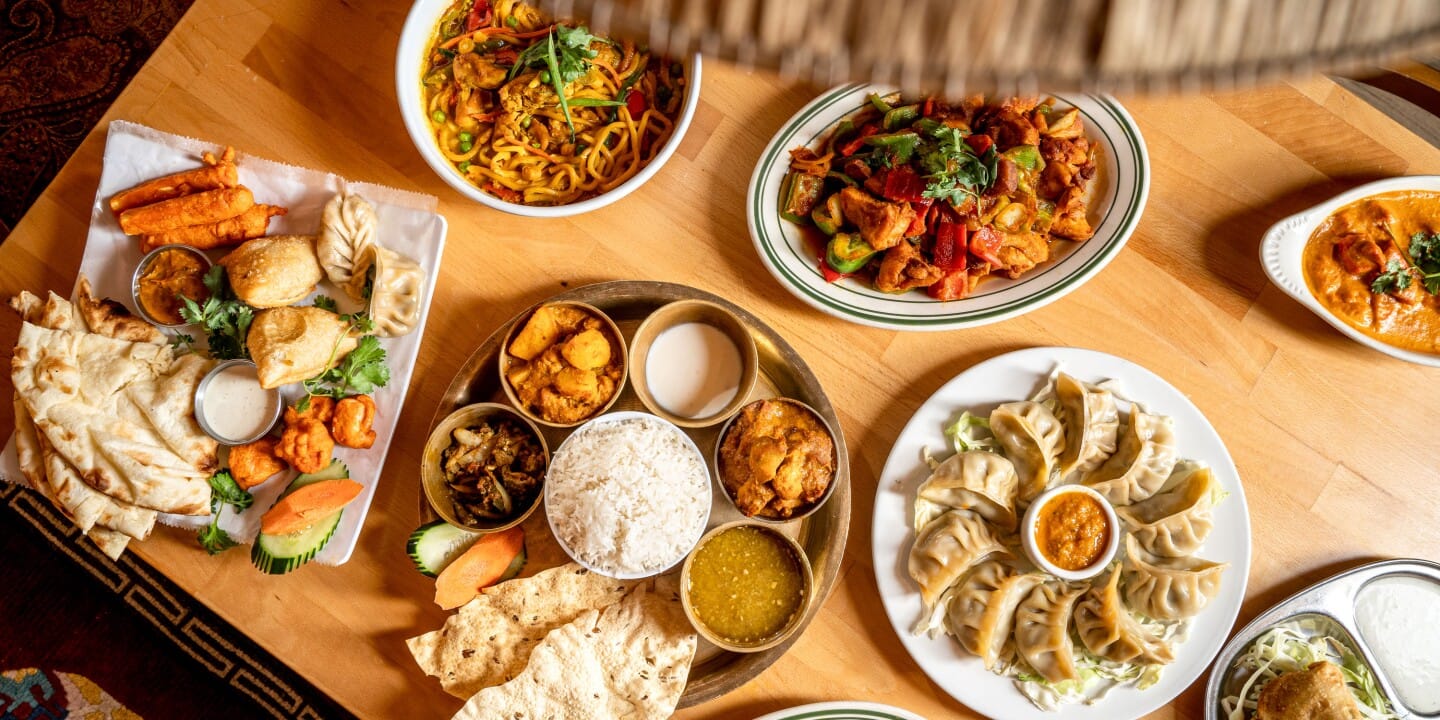
Every great immigrant food story has a geography logic. Colorado's Sherpa community has one of the most specific: mountain to mountain. As AFAR reports, Sherpas — an ethnic group that migrated from eastern Tibet to Nepal, renowned for physical adaptations to high altitude — have settled in Colorado in significant numbers, many from the Khumbu region near Everest, "trading one range for another while building businesses and families."
The food they've brought deserves understanding on its own terms — not as a subset of Indian or Nepali cuisine. Dal bhat, the lentil-and-rice backbone of Himalayan life, is built for endurance: eaten by farmers, porters, and trekkers who need sustained energy for a full day. Alongside it: momos (steamed dumplings tracing to Tibetan traders in the Kathmandu Valley), yak curries, and Sherpa-style chow mein carried by Tibetans who settled in Nepal.
There's already a retail pipeline forming. Sherpa Chai, the spiced tea blend that originated at Sherpa's Adventure Restaurant & Bar in Boulder, is now sold in thousands of stores across the U.S., according to the restaurant's own site. Small-batch thukpa kits and packaged condiments are appearing in regional markets. What's happening in Colorado is the formation of a culinary community before it becomes a trend — the stage where the food is still being cooked for the people who grew up eating it.
If the Sherpa food scene follows the pattern of Sriracha (Huy Fong Foods, founded by a Vietnamese refugee in Los Angeles) or Cholula, the next Himalayan pantry staple is probably already on a restaurant table in Golden or Boulder.
Michelin Just Drew a New Restaurant Map for the Great Lakes
Michelin announced that Cleveland, along with other Great Lakes cities, is joining the guide's expanding regional footprint. According to Axios, Michelin international director Gwendal Poullennec framed the move as spotlighting talent and food cultures across the region.
This matters because prestige is being redistributed geographically. Stars and listings attract tourism, talent, and capital — inspectors' attention creates demand for better suppliers, more specialized cooks, and retention of local talent instead of a perpetual drain to coastal hubs. Combined with Michelin's addition of nine new recommended restaurants to the New York guide this month (per Forbes), the prestige map that used to be coastal is actively being redrawn.
If this succeeds, expect investment in regional supply chains and talent retention outside New York, Chicago, and California. If it doesn't — if Michelin's inland expansion produces a handful of stars that don't change the underlying economics — the signal will be whether chefs who earn recognition in Cleveland or Detroit stay there or use it as a stepping stone to a coastal opening. The Kyoto & Osaka Michelin ceremony is scheduled for April 23 and is another moment to watch for stylistic signals.
A Houston Fisherman Flips the Seafood Supply Chain
If you've eaten at Houston's top tables, you've probably tasted Chris Parson's fish. According to CultureMap Houston, Parson — a fisherman who supplied restaurants including BCN Taste & Tradition — opened Hook & Line near Third Ward on April 10, selling Gulf shrimp, red snapper, and oysters priced for the neighborhood rather than tourists. No middlemen. On-site filleting. Daily sourcing.
The model is simple but structurally interesting: collapse the supply chain, keep margins away from distributors, and offer pristine quality at accessible prices. If it works and scales, more coastal cities could see fisher-to-table spots that reduce waste and build loyalty. The failure signal is equally clear: if a single fisherman can't maintain volume and consistency without the distribution infrastructure he bypassed, the model stays a beautiful one-off. Watch whether other chef-suppliers in Gulf cities follow.
Fine Dining's Middle Finger (and Love Letter to Mozzarella)
Sometimes the most radical thing a highly trained chef can do is put down the plating tweezers and start stretching cheese. According to NJ.com, a top New Jersey chef explicitly framed a new restaurant as a "middle finger to fine dining," abandoning the tasting-menu format for obsessive daily-production work: house-made mozzarella, high-volume regional dishes, and a service model built for repetition rather than spectacle.
This isn't a step down in skill — it's a reallocation. Fine-dining precision applied to comfort and volume is a growing business model, and it changes where techniques, staff skills, and supply chains are valuable. If more tasting-menu alumni follow this path, everyday restaurant quality rises across price points. The failure mode: if the economics of daily artisan production (mozzarella spoils fast, labor costs are high) can't sustain the volume needed to replace tasting-menu margins, the concept stays aspirational. Watch whether the model generates repeat neighborhood business or attracts one-time destination diners — the former is sustainable, the latter isn't.
California's Ingredient Transparency Fight Returns
A California proposal backed by the Center for Science in the Public Interest, according to their published support memo, would require fuller ingredient disclosure and seek to rein in parts of the GRAS (generally recognized as safe) framework — the system that lets companies self-certify novel ingredients without FDA review.
This matters beyond California. When states tighten disclosure or safety review, national brands typically reformulate rather than carry separate products for different markets. Self-certification has been a fast lane for new ingredients; closing it raises costs that get passed down the supply chain. If the proposal gains momentum, watch for voluntary disclosures from major manufacturers trying to get ahead of a mandate. If it stalls, the GRAS loophole stays open — and the next moringa-style outbreak (the FDA's ongoing Salmonella investigation tied to moringa leaf powder has reached 97 cases across 32 states, per the agency's own update) will renew the argument.
🍳 This Week's Technique
This week's technique: Steam-sealing and flavor encapsulation in dumpling cookery.
When you seal a filling inside dough and steam it, you create a closed system. Moisture released as proteins denature (around 140°F) has nowhere to go — it recirculates, dissolving fat-soluble aromatics (garlic, ginger, spice oils) and redistributing them through the filling instead of losing them to open air. The wrapper simultaneously undergoes starch gelatinization, absorbing water to become tender-translucent. The result: more concentrated flavor than the same filling cooked open. This logic is shared across Tibetan momos, Georgian khinkali, Shanghainese xiao long bao, and Polish pierogi — different traditions, same physics.
📖 Recipe Worth Trying
This week's recipe: Sherpa Beef Momos with Tomato Achar.
If you want to understand flavor encapsulation by doing it, momos are the most forgiving entry point. The Sherpa beef version uses a filling spiced with cumin, coriander, and timur (Himalayan pepper), sealed in a simple flour-and-water dough. The tomato achar — roasted tomato pounded with sesame, timur, and chili — provides the acid-fat contrast that makes the whole system click. From the Himalayan culinary tradition, via Colorado's Sherpa restaurant kitchens. Start with steamed; graduate to pan-fried (kothey) once you trust your pleats.
⚡ What Most People Missed
- FDA flagged a multi-city raw fish sanitation problem. A warning letter to Ocean Group cited Listeria monocytogenes found in environmental swabs across the company's Los Angeles, Las Vegas, and Dallas facilities, concluding that ready-to-eat raw salmon and tuna were adulterated due to insanitary conditions. One processor, three facilities, same pathogen — that's a systems problem affecting sushi counters and poke programs downstream.
- Atlantic yellowfin tuna landings are running at half of last year's pace. NOAA's April 15 update shows 49.4 metric tons through March 31 versus 100.4 metric tons in the same period last year. Meanwhile, the Elephant Trunk scallop area opened April 1, giving vessels more access. A two-speed seafood spring means one crudo gets expensive while scallops become the easier special.
- The Mid-Atlantic scup catch just tripped an emergency wire. At the Mid-Atlantic Fishery Management Council's April meeting, the commercial fleet exceeded its Winter I scup quota by roughly 22%. The Council is initiating emergency action that may tighten trip limits during summer — right when demand peaks. Scup is the cheap whitefish that fills menus when everything else gets pricey; losing access to it creates a localized shortage with outsized menu impact.
- The FDA has a quiet docket open on lab-grown supplements. Docket No. FDA-2026-N-2047, with a public comment window scheduled to close April 27, asks whether ingredients produced by precision fermentation and cell culture qualify as "dietary ingredients." According to the National Law Review, a favorable ruling would give food-tech startups a faster, higher-margin path to market through supplements rather than bulk food approvals.
- Fertilizer shocks are pushing U.S. farmers away from corn. A risk note from agricultural insurer Lockton highlights that nitrogen fertilizer price spikes tied to Strait of Hormuz disruptions are driving growers toward soybeans (which fix their own nitrogen) and away from corn. Corn is the backbone of livestock feed — a widespread rotation shift tightens fall supplies and raises beef and poultry costs months from now.
📅 What to Watch
- If Millennium's May 16 closing draws national attention, watch whether it accelerates the narrative that plant-forward technique — not plant-only restaurants — is the lasting legacy of the vegan fine dining era.
- If the FDA's dietary supplement docket (public comment window closes April 27) produces a favorable ruling, precision fermentation startups gain a commercial lifeline that could redirect investment away from bulk food and toward supplements within months.
- If Mid-Atlantic scup restrictions tighten for summer, regional seafood buyers will scramble for substitutes — watch for porgy and whiting price spikes in Northeast wholesale markets as a second-order signal.
- If the Strait of Hormuz disruption persists through May, the USDA's May WASDE report will be the first place to see whether corn and soybean projections are being revised — and that revision sets fall meat prices.
- If Michelin's Great Lakes expansion produces stars that retain chefs locally rather than launching them to coastal cities, it marks a genuine structural shift in where American culinary talent builds careers.
The Closer
A 31-year-old vegan restaurant scheduled to close because vegetables won, riot police dispatched over chicken tenders in Paris, and a fisherman in Houston deciding he'd rather sell to the neighborhood than to the chef who would mark it up to customers at roughly four times the price.
Somewhere in Sardinia, a cook is fermenting fish bones into stock and calling it luxury — which is exactly what your great-grandmother called Tuesday.
Until next week, eat with your eyes open.
If someone you know cares about what's actually happening in food — not just what's trending — send this their way.