Virginia Daily — Mar 10, 2026
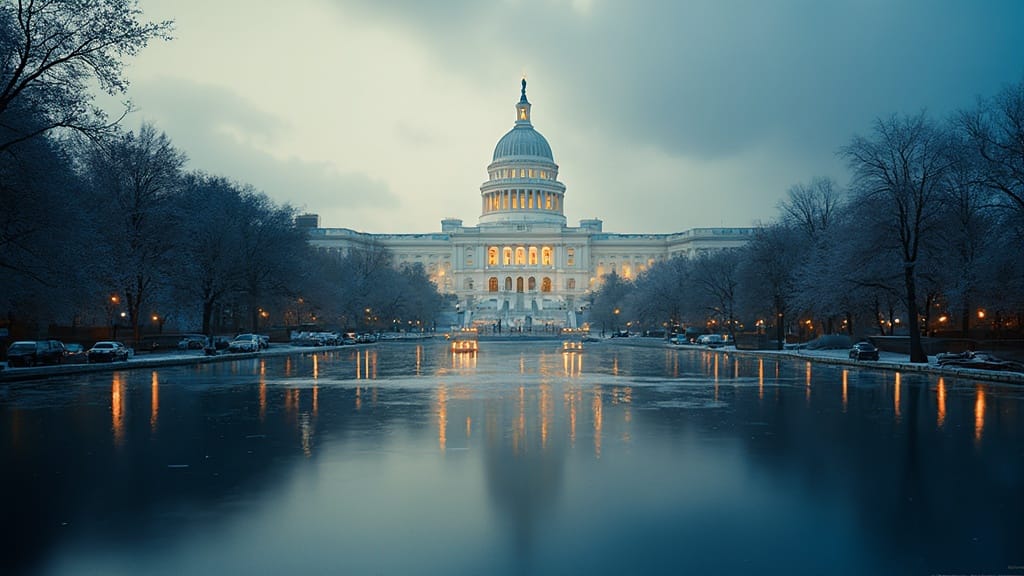
Photo: lyceumnews.com
Tuesday, March 10, 2026
The Big Picture
Democrats control every lever of power in Richmond and still can't agree on a budget — amid an intra-party fight over a data center tax break that cost the state $1.6 billion last year, and with the conference committee yet to meet and four days left before adjournment. Meanwhile, the General Assembly just sent Governor Spanberger an assault-weapons ban that would be the first passed by a Southern state legislature, gun shops are counting inventory losses, and lawyers are already drafting federal complaints. Thursday, March 12, is the real deadline for conference reports.
Today's Stories
The Budget Talks Haven't Started — and the Clock Just Hit Four Days
The General Assembly is supposed to gavel out Saturday, March 14, 2026. The House and Senate budget conferees have not met. Not once. That's not a scheduling quirk — it's a standoff over whether Virginia keeps handing the data center industry a sales-tax exemption that cost the state $1.6 billion last year alone, up from a projected $1.54 million when legislators created it in 2008.
Senate Finance Chair Louise Lucas (D-Portsmouth) went public today and didn't mince words: "There will not be a budget with Glenn Youngkin's Data Center tax breaks in it. Glenn drove up YOUR utility bills to give tax breaks to data centers. Strong as battleship steel, I will fight for affordability for the people." The Senate wants to kill the exemption and redirect the revenue toward teacher raises, tax rebates, and childcare. The House wants to keep it. Governor Spanberger's office cited "serious concerns about going back on Virginia's commitments to businesses that have invested in the Commonwealth."
This isn't Democrats versus Republicans. It's Democrats versus Democrats — with Lucas publicly demanding that House and Governor allies name which priorities they'd cut to preserve the break: teachers? transit? health insurance? House Speaker Don Scott tried to smooth things over: "She's been here a long time. She's a mentor. If she said whatever she said while we're in this budget negotiation, it's politics."
Here's the mechanical problem: House rules require conference reports to be available 48 hours before a floor vote. That means the report would need to be posted by Thursday morning, March 12, 2026. Del. Rob Bloxom (R-Accomack), a conferee, said meetings could begin as early as Tuesday afternoon or Wednesday — which is cutting it to the bone. Without a deal, the session can extend up to 30 days, an outcome the trifecta that campaigned on competent governance would find politically costly.
The Northern Virginia Technology Council went public Monday, March 9, 2026 urging lawmakers to strip the Senate's repeal provision, warning it would undercut Virginia's global data center pitch. The industry's coalition warns the state could lose an estimated $1.3 billion in tax revenue if companies decide to leave. Lucas says she doesn't believe they'll leave. The truth is probably somewhere between — but the conference committee has to pick a number by Thursday morning, or many budgeted payments and timelines could be delayed.
Virginia Sends Spanberger an Assault Weapons Ban — a First for the South
On March 10, 2026, the General Assembly sent House Bill 217 to Governor Spanberger after final passage by both chambers. The bill bans the sale, manufacture, and import of assault weapons and magazines holding more than 15 rounds, effective July 1, 2026; it includes a grandfather clause allowing current owners to keep existing firearms. The bill moved through the House Courts of Justice Committee in the House and the Senate Judiciary Committee during this session before floor passage.
Sen. Saddam Salim (D-Fairfax), the bill's sponsor, framed the grandfather clause simply: "If you had it, you can keep it, but going forward, you simply cannot purchase them." Del. Dan Helmer (D-10th) was more direct: "We're going to be the first Southern state with an assault weapons ban."
The business impact is immediate. Mark Moorefield, owner of L&M Firearms in Pittsylvania County, said the ban would eliminate roughly 65% of his inventory. Statewide, gun sales are surging this week as buyers rush to beat the July 1 deadline. National gun-rights groups have vowed immediate litigation, and Second Amendment organizations are preparing challenges in both state and federal court. The Fourth Circuit has previously upheld Maryland's similar ban; challengers seeking federal relief would likely need Supreme Court review to overturn that precedent.
Under Virginia law, the governor has 30 days to sign or veto the bill. Her office said she is "grateful for the efforts of legislators and advocates" and looks forward to reviewing the legislation — language that stops short of a commitment. If she signs, expect federal filings in the Eastern District of Virginia's "rocket docket" within days and a preliminary injunction fight before July 1 is a real possibility.
Loudoun's Data Center Crossroads: A 300-Megawatt Proposal Meets a Restless Board

The budget fight in Richmond is abstract until you watch what happened in Loudoun County today. The Board of Supervisors heard a special exception request — rumored to be Amazon — for a 300-megawatt data center campus on land originally zoned for housing. Hours of testimony. Residents cited water use for cooling and power grid strain. Company representatives promised 200 permanent jobs and millions in tax revenue. Supervisor Juli Briskman openly questioned whether "data center alley" has grown too fast. Dominion Energy noted it would need significant grid upgrades. No vote was taken; the matter returns in coming weeks.
This is where the state-level numbers become someone's backyard. Data centers generate nearly half of Loudoun's property tax revenue, and that growth has allowed the county to lower the real property tax rate to $0.805 per $100 — county officials say without data centers, it would likely exceed $1. Sen. Russet Perry (D-Loudoun), whose district contains the highest concentration of data centers in the world, put it differently: "What began as an incentive has turned into an automatic, billion-dollar subsidy."
Meanwhile, Prince William County postponed its own vote on a temporary moratorium on new data center projects until April after a packed public hearing with more than 100 speakers split down the middle. Data centers are creeping south from Loudoun, and Prince William is becoming the next battleground. The question the conference committee in Richmond must answer by Thursday is whether Virginia renegotiates the deal — and these local fights show why the answer matters block by block.
Non-Compete Limits Head to Spanberger's Desk — and HR Departments Should Be Paying Attention
If you work for a contractor in Reston, a hospital system in Richmond, or a tech shop in Tysons, your next layoff might come with more freedom.
On March 10, 2026 the General Assembly sent SB 170 to the governor after the bill advanced through the Senate Commerce and Labor Committee and received final passage by both chambers. The bill would invalidate non-compete agreements for employees who are laid off without severance, unless they were terminated for cause. Virginia already limits non-competes for lower-wage workers; this bill ties enforceability to how an employer treats an employee on the way out.
In practice, companies that want to keep restrictive covenants will need to budget for severance packages or rethink how broadly they deploy non-competes — especially in federal contracting and healthcare, where they are standard. The bill doesn't fully resolve whether customer non-solicitation clauses count as non-competes, which is where the next round of litigation will land. If Spanberger signs it, HR departments across Northern Virginia will be rewriting employment contracts well before the next round of layoffs — and the Eastern District of Virginia could end up hearing precedent-setting challenges.
Virginia Beach Gets Its Election System Written Into Law — and Other Cities Are Watching
On March 10, 2026 the General Assembly approved emergency legislation to write Virginia Beach's 10-district-plus-mayor system directly into the city charter, ending years of litigation and confusion over at-large versus district representation. The local bill moved through the House Counties, Cities and Towns Committee and the Senate Local Government Committee before final passage; because it was passed as emergency legislation it takes effect immediately and shields the city's existing council districts from renewed legal attack.
Even if you never vote in Virginia Beach, this matters. By codifying district-based representation through emergency legislation, the General Assembly created a template other charter cities can follow if they want Richmond to lock in their election systems and fend off at-large voting challenges. For local officials in Fairfax, Richmond, or elsewhere where election structures have been contested on civil-rights grounds, the message is clear: if your system becomes a headache, Richmond may step in and write the rules in black and white.
⚡ What Most People Missed
Bills to require State Corporation Commission certification for data center builds failed to advance earlier this session. Legislation that would have put data centers under SCC oversight did not move forward; as a result, unless the budget deal includes new requirements, Virginia may end this session without increased grid-reliability oversight tied to construction approvals.
Dominion's demand pipeline is enormous. Buried in State Corporation Commission filings (as of February 2026), data centers have requested roughly 70,000 megawatts of power from Dominion — almost triple Dominion's current peak load. Northern Virginia Electric Cooperative projects its peak load growing from about 1,400 MW to over 5,000 MW by 2030, with 13,000 MW projected by 2040. Those capacity requests are a central input to budget deliberations this week and a major reason state officials are weighing the trade-offs of changing incentives now.
The assault-weapons bill includes a three-year firearms prohibition tied to conviction. Most coverage has focused on the July 1 sales ban and the grandfather clause. Less noticed: the bill's enforcement provisions would bar someone convicted under the new law from purchasing, possessing, or transporting any firearm for three years — a significant penalty that will factor heavily into constitutional challenges and complicate claims that "you can keep what you have" tells the whole story.
Northern Virginia left nearly $40 million in transit money on the table. Regional governments submitted only $70 million in projects for the I-66 Commuter Choice grant round when $100 million was available. After ineligible proposals were tossed, $39.5 million in potential bus routes, park-and-ride lots, and station upgrades went unclaimed — a planning-capacity problem as much as a funding one.
📅 What to Watch
- If no conference report is filed by Thursday evening, March 12, the session can extend up to 30 days — which would push back implementation and licensing timelines for retail cannabis, delay scheduled minimum-wage adjustments, and likely require counties that budgeted on enacted spending to either reprioritize capital projects or adopt temporary cash-management measures.
- If Spanberger signs the assault weapons ban, expect federal litigation in the Eastern District of Virginia within days and a likely preliminary injunction hearing before July 1 — the EDVA "rocket docket" moves fast enough that the law's enforceability could be tied up in court before it technically takes effect.
- If the budget conference adopts the Senate's data-center phase-out, watch for immediate industry announcements about paused projects in Loudoun and Prince William — those pauses would force counties that rely on project-based property tax projections to either raise rates, cut services, or delay road and school projects to plug multi-year budget gaps.
- If Fairfax County Police proceed with full radio encryption without a media-access plan, newsrooms and community groups will lose the ability to monitor roughly 90% of live dispatch traffic — a transparency shift that would hinder public verification of response times, complicate court reporting on police actions, and could prompt new county-level transparency requirements or statutory remedies.
- If Loudoun's Phase 2 zoning standards set aggressive noise and setback requirements this spring, developers may redirect new builds to Prince William or Southside Virginia — accelerating the geographic spread of data centers into communities that haven't yet built the regulatory or infrastructure frameworks to manage rapid energy, water, and road impacts.
That's Virginia today — a trifecta that can't close a budget, a gun bill waiting for a signature, and a billion-dollar tax break that somehow became the thing holding everything else together. See you tomorrow, assuming the clocks in Richmond are still plugged in.